Organized Parents
Adapted from “Notes From the Field: If You Want Great Schools, First Work With Parents to Create Actionable Demand,” The 74, May 2017. Individual roles and organizations have changed since the release of this publication.
“Organizing is about weaving a tapestry of trusted relationships.” – Joe Givens
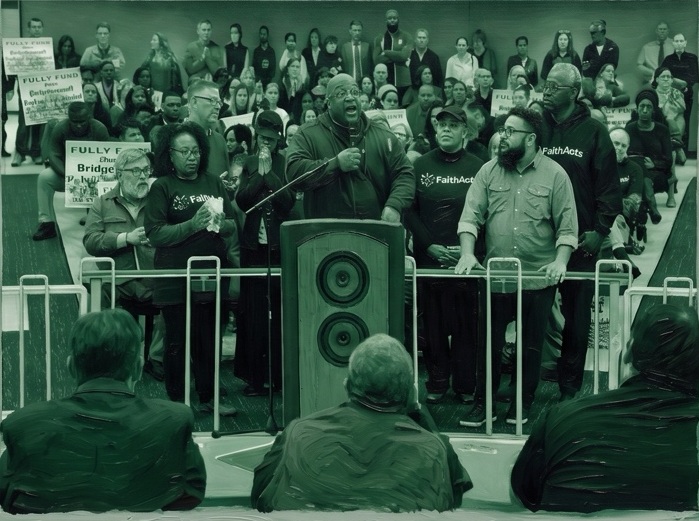
Not long ago, someone cautioned me, “If you tell parents how bad their schools are, but they can’t do anything about it, you’re only making it worse for them.” This is why effective education organizers don’t just help parents understand whether there is a problem with education in their community; they also help them realize that they have the power to change what isn’t working. This is the true essence of organizing: It is not about giving power, but rather about helping people see the power they have but are not exercising.
As one community organizer noted, “It is amazing to see when the light goes on in a parent’s eyes – not just that they have power, but how to use it. It’s what hope looks like – but it is not hope that someone will do it for them. It’s that they can do it for themselves and can do it together.”
Each person’s approach to power may be different. Most parents will focus on exercising their power to meet the needs of their individual children. A subset will work as a group to take on larger education challenges in their school or across the system that they cannot solve without collective action. And a few will assume the mantle of community leadership, organizing an enduring, local movement that makes change happen and continues to preserve and protect it. Joe Givens, a lifelong community organizer in New Orleans, teaches that “organizing is about weaving a tapestry of trusted relationships.”
Trusted relationships become the currency that purchases change.
What is the difference between organizing and mobilizing?
Some people use these two terms interchangeably. Others hold passionate beliefs about the difference between them.
Specifically, some people feel that too often those who say they “organize” really “mobilize.” This is based on the following distinctions: mobilizing is fairly short-term and transactional, while organizing is longer-term and grounded in building relationships. An additional distinction some make is that in mobilizing the agenda is driven by external parties, so mobilizing is done TO people (to get them to act), while in organizing the people who act are part of creating the agenda – i.e., organizing is done WITH and BY people. In this construct, mobilizing often has negative connotations.
While I believe that organizing and mobilizing are different things, they are both valuable concepts that work together if positioned as follows:
Organize: Organizing is about building relationships and agency, which in turn builds an infrastructure of parent/community power that sets an agenda and then acts on that agenda. Think of organizing as a horizontal line that projects out into infinity (ideally).
Mobilize: Mobilizing happens when that locally led infrastructure asks parents and members of the community to act on an agenda that its leadership has proposed. Mobilizing can be asking individuals to act separately or as a community. Think of mobilizing as vertical lines that spike at the moments those who are organizing identify a necessary action – and can enlist people to support that organizing agenda.
Mobilizing can and does happen without the organizing backbone – but when it does, it is more transactional and usually on a narrower and more immediate band of common interest.
Together: Organizing is about building a common agenda and helping parents understand how to exercise their power individually, collectively as a team, and (for a subset) as leaders of that team. Turning organizing into power also requires getting a larger number of people to act in response to requests from those leaders – which is “mobilizing” them.
The central distinction here is who owns the agenda. Detractors of mobilizing are most often concerned that it is the act of outsiders imposing an agenda on parents in a community. But this looks very different when it is an organized base of locally led parents who are leading efforts to mobilize their community.