Strategic Planning

At its most fundamental, strategic planning is about making decisions
Specifically, strategic planning should enable leaders and organizations to:
- Make decisions about what an organization will and will not do in a world of constrained resources to make progress against measurable goals.
- Articulate the roadmap of actions and needed resources (time, talent, money, systems, and partners) to successfully implement those decisions over a specific timeframe, including each person’s, team’s, and partner organization’s role in implementation.
- Clearly communicate what those decisions are and why they were made, so the plan serves as a compelling external pitchbook and internal playbook.
Strategic planning is often challenging
- Making decisions is hard – good things will get left on the table. Decision-making isn’t just about the “Yes” but also the “No” or “Not Now.”
- Planning takes (sometimes a lot of) time, and it is easy for the immediacy of the urgent to overwhelm the important work addressed in strategic planning.
- For many organizations, planning gets into trouble because there is no clarity on the decision-making process and the criteria for making decisions.
- Many people have been burned by previous strategic planning that produced “sound and fury and PowerPoint signifying nothing.” * No decisions were made, the decisions were not properly resourced, or people and teams had no clarity on their responsibilities and felt alienated from and disinvested in the process.
- Organizations hesitate to plan for the long term because conditions change. Strategic plans are decisions about how an organization wants to shape the long term to the extent it can and how it will respond to the future it expects. It can also be a starting point for evaluating new challenges and opportunities and then making intentional trade-offs.
* If Shakespeare had written a play – either a comedy or a tragedy – about strategic planning.
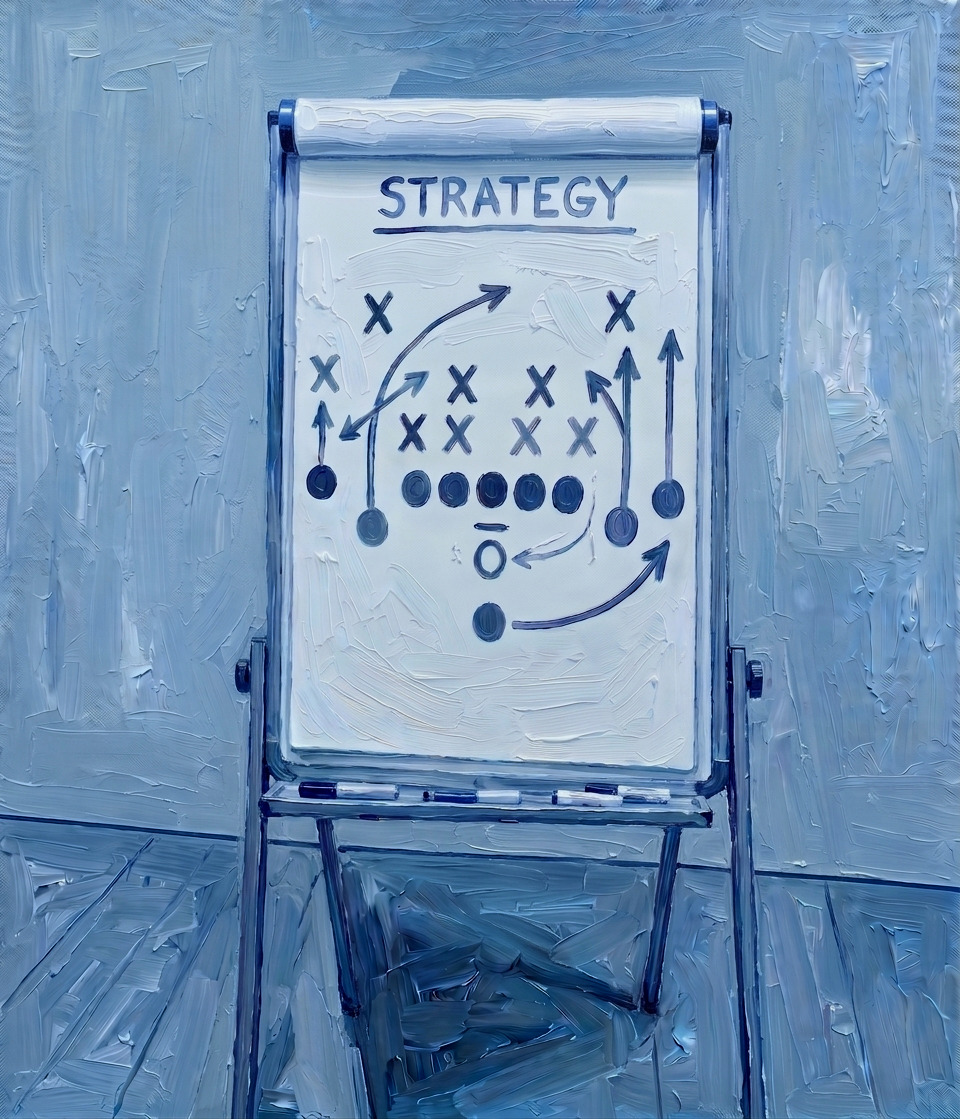
What makes a good strategic planning process?
- Decisions. Clearly identify the decisions an organization wants to make as part of planning. Where are there organizational tensions and diverse perspectives about the direction of the organization that need to be explored and then resolved?
- Data. Identify and agree on what mix of internal and external data, both qualitative and quantitative, will help inform those decisions, and the methods and the roles/responsibilities for capturing and analyzing it.
- Dialogues. Identify which voices need to be included over the course of strategic planning to make the best possible decisions and ensure buy-in from those responsible for implementation. Which internal and external stakeholders should be included to provide critical input and insights? For each stakeholder, what does strategic planning need to do so they can fully participate and be their authentic selves, especially in the “rooms where it happens,” where decisions are debated and then made?
People are much more invested in the destination of strategic planning when they have been part of the journey.
At the same time, organizations need to make trade-offs between “efficiency” and “community” around stakeholder involvement when time and resources are limited.
- Planning for planning. Strategic planning starts with good planning about… strategic planning. Create a strong workplan and timeline that everyone can agree to and that aligns with the very full day jobs people are already doing, often in challenging circumstances. Establish clear processes for transparent, timely communications within the strategic planning team and with the larger organization. Make the time to be iterative.
- Planning for planning includes the plan for making decisions. Determine who has what role in making decisions – who is driving recommendations, who is providing input, who owns the final decision that commits an organization to action. Consider a decision-rights framework (I strongly encourage the use of RAPID) and what sequence the decisions will follow over the course of planning (many big decisions break down into smaller decisions over the course of strategic planning).
- Strategy must include Implementation – “Vision without execution is hallucination” (Guy Kawasaki). Strategies succeed because they can be implemented, so implementation should be part of strategic planning. The speed and ability to implement may be a gating factor on what an organization can accomplish over the course of a strategic plan. This also underscores the importance of involving stakeholders who will be responsible for implementation in strategic planning.
The components of a good strategic plan
Please note that I will be adding to this content over time with detailed observations and lessons on each section. For the moment, please click on the Strategy boxes to learn more.
The Strategy (click for more)
What needs to happen to execute a strategy
Constraints may limit ambitions
This is… a lot. If an organization feels that it can exclude something, it should.
That said, I have found that the most successful strategic plans lay these out clearly and are then used as an external pitchbook (sharing different levels of detail based on the audience) and an internal playbook to guide execution.
An organization may choose to group or sequence these differently, which is great – whatever feels most intuitive in telling an organization’s story. Some organizations may add components – for example, an advocacy organization may explicitly add in a section on its policy agenda.
Organizations don’t need to use this specific language, as long as the concepts are present. The critical thing is for organizations to have a common language about each element of a strategic plan so they can communicate with each other, not past each other.
While strategic planning has a generally linear direction, the process needs to provide the flexibility to be iterative.
Organizational or financial constraints, or not hitting key growth milestones, may limit the ambitions articulated higher in the framework (and a strategic plan may have multiple scenarios based on the ability to meet critical performance milestones). Implementation planning may point to limits or different timing for executing priorities and initiatives, or for setting different performance targets.
Detailed measures of progress must align with the Intended Impact, and in particular any performance targets the organization has committed to meet by the end of a strategic plan.