Informed Parents
Adapted from “Notes From the Field: If You Want Great Schools, First Work With Parents to Create Actionable Demand,” The 74, May 2017. Individual roles and organizations have changed since the release of this publication.
People don’t try to solve problems they don’t know they have. In too many school districts and cities, parents are not even aware of the inadequacy of their education systems. A 2017 report by Learning Heroes found that 90% of parents nationally believe their children are at grade level in reading when, in reality, only 34% of eighth-graders are. And this disparity holds true across all demographics.
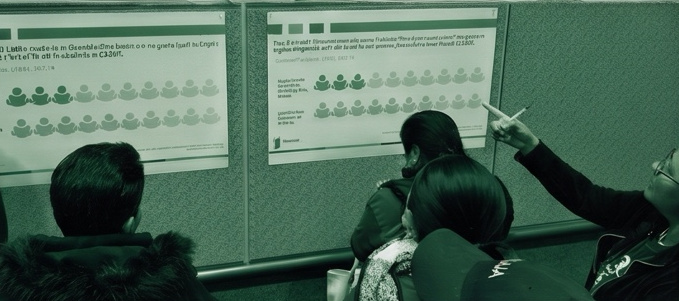
Many students and families in failing systems don’t find out that the system has failed them until it is too late. The experience of Maribel Gonzalez is a case in point.
“I grew up in South Central LA, in Watts, where there are a lot of good people but not a lot of opportunities,” she explains. “My teachers told my parents I was ‘well behaved and a pleasure to have in the classroom.’ I was the valedictorian of my graduating middle school and high school classes. I had the highest GPA of my graduating class.”
“Yet when I arrived in college, I had to spend my first two quarters taking remedial courses before I could begin to accrue college credit. I did everything my high school told me I should do. My school told me I was ready. But it lied.”
Gonzalez ultimately overcame her lack of preparation and became a leader in education activism (see Strategy 4: Exercising the Power of Their Vote).

Sadly, Gonzalez’s story is not an anomaly. If knowledge is power, too many parents are disempowered by not knowing the truth about their schools and the academic readiness of their children. Too often, schools tell parents that their children are doing fine, even when they are not. And formal school reporting, at the school, district, and state levels, is all too often both untimely and edu-gibberish.
To know whether students are getting an effective education, and to start on the journey to change things if they aren’t, parents need timely, actionable information about the performance of their children, schools, and school systems.
Unfortunately, even well-intentioned education reformers sometimes fall into the edu-gibberish swamp. They try to tell parents everything they could know (and everything they know), without focusing on the bottom line of what parents want and need to know. They get too academic about academics and end up not making a compelling, accessible, and relevant case to parents about the reality of the broken education systems to which they entrust their children.
Finally, the messenger is as important as the message. People are more willing to listen to hard truths from people they trust – members of the community or those who have earned credibility in the community.